
Hanoi for First-Time Visitors: Everything You Need to Know
Hanoi is one of the best cities in Vietnam for first-time visitors because it gives you an introduction to so many sides of the country in one place. You can walk through the historic Old Quarter in the morning, visit thousand-year-old cultural sites before lunch, drink Vietnamese coffee in the afternoon, explore Hanoi by Vespa before sunset and finish the day with a bowl of bún chả or phở. The city can feel busy and chaotic at first, but that energy is part of its character. Hanoi’s Old Quarter, Hoan Kiem Lake, Temple of Literature, Ho Chi Minh Complex and West Lake are among the key experiences for a first visit.
How Many Days Do You Need in Hanoi?
For most first-time international visitors, 3 days in Hanoi is the ideal starting point. Two days is enough for the essential attractions, while four days gives you time to explore beyond the Old Quarter, enjoy a food experience, visit quieter neighborhoods and take a countryside or Vespa tour. Travelers with five days or more can use Hanoi as a base for additional experiences around Northern Vietnam. The important thing is not to treat Hanoi as a checklist. The city becomes much more interesting when you leave time to sit in a café, walk without a fixed route and observe everyday life.
Day 1: Start With Hoan Kiem Lake and the Old Quarter
Your first day should begin around Hoan Kiem Lake. Walk around the lake, visit Ngoc Son Temple and cross the red Huc Bridge before entering the Old Quarter. The historic district is known for its traditional guild streets, narrow buildings, small businesses, cafés and food stalls. The Old Quarter is compact enough to explore on foot, although traffic can be intense and sidewalks are often busy.
Spend the morning simply walking. Look at the architecture, shop signs, flower vendors, food preparation and old tube houses. Stop for Vietnamese coffee instead of trying to visit another attraction every 30 minutes. For lunch, try phở, bún chả or bánh cuốn. Hanoi’s food culture is one of the strongest reasons to spend several days in the city.
In the afternoon, continue toward St. Joseph’s Cathedral, explore nearby streets and return to Hoan Kiem before sunset. After dark, the atmosphere changes again. Walk around the lake, explore street-food areas and, when operating, visit the weekend night market. The official Hanoi travel guide specifically recommends the lake, Old Quarter walking, food and evening street life as central parts of the Hanoi experience.
Day 2: Explore Hanoi’s History and Culture
Start your second day with the Ho Chi Minh Complex, including the One Pillar Pagoda and surrounding historical sites, depending on current opening arrangements. Continue to the Temple of Literature, one of Hanoi’s most important cultural landmarks. Founded in 1070, the Temple of Literature is closely connected with Vietnam’s long tradition of scholarship and education.
After lunch, choose one or two additional attractions rather than trying to visit every museum. Thang Long Imperial Citadel is an excellent choice for travelers interested in Hanoi’s long political history and archaeology, while Hoa Lo Prison Relic offers a more modern historical perspective. Vietnam’s heritage itinerary also groups the Imperial Citadel, One Pillar Pagoda, Ho Chi Minh Complex and Old Quarter into a strong cultural route through Hanoi.
End the afternoon with Vietnamese coffee or a relaxed walk. In the evening, watch a water puppet show, another traditional Northern Vietnamese cultural experience that works particularly well for first-time visitors and families.
Day 3: See the Hanoi Beyond the Guidebook
Your third day should be different. Instead of adding another long list of museums, explore Hanoi from street level. A Vespa, motorbike or bicycle experience is an excellent way to connect the Old Quarter with areas such as Long Bien Bridge, West Lake, Red River neighborhoods and quieter residential streets.
For travelers who don’t ride themselves, a guided passenger experience allows you to enjoy Hanoi’s traffic, architecture and street scenes without having to navigate them yourself. A food-focused ride can also combine sightseeing with dishes you might never discover independently.
This is where Hanoi begins to feel less like a collection of attractions and more like a living city.
10 Things First-Time Visitors Should Know About Hanoi
1. Hanoi Is Busy
Don’t expect the city to feel quiet, especially around the Old Quarter. Motorbikes, cars, pedestrians, street vendors and businesses all share limited space. The constant movement can feel overwhelming for the first few hours, but it quickly becomes part of the experience.
2. The Old Quarter Is Walkable, but Not Always Easy
You can explore much of the Old Quarter on foot, but sidewalks may be occupied by parked motorcycles, tables, merchandise and vendors. Walk carefully and stay alert when crossing streets. Official tourism guidance describes the district as easily explored on foot while also acknowledging its frenetic atmosphere.
3. Learn How to Cross the Street
Traffic is probably one of the first things international visitors notice. Don’t suddenly run into the road and don’t repeatedly change direction. Look carefully, choose a safe moment and cross steadily. After a day or two, the rhythm becomes much easier to understand.
4. Vietnamese Coffee Is Part of the Experience
Coffee in Hanoi is not just a quick drink. It is a social activity. Try egg coffee, traditional Vietnamese iced coffee or coconut coffee, then sit and watch the street. Hanoi’s café culture is one of the easiest ways to slow down between sightseeing stops.
5. Breakfast Is a Great Time for Phở
Don’t wait until dinner to try phở. A traditional Vietnamese breakfast can be one of the best ways to begin your day. Hanoi is widely associated with phở, and the city’s street-food culture is an important part of its identity.
6. Carry Some Cash
Cards are increasingly useful, particularly in hotels and established restaurants, but cash remains convenient for street food, small cafés, markets and small businesses. Keep your valuables secure and avoid carrying everything in one wallet.
7. Download Translation and Maps Before You Need Them
Your phone can be extremely useful for maps, translation, hotel information, transportation and tour confirmations. Save your hotel address and important booking information offline as a backup.
8. Don’t Stay Only in the Old Quarter
The Old Quarter is essential for a first visit, but Hanoi is much larger. West Lake, the French Quarter, Ba Dinh, Long Bien and the Red River areas all offer different experiences.
9. Give Yourself a Break in the Middle of the Day
Hanoi can become hot and tiring, particularly when you are walking continuously. Have a long lunch, stop for coffee or return to your hotel for an hour. Your evening will be much more enjoyable.
10. Don’t Plan Every Minute
Some of the best Hanoi experiences are unplanned. A small café, a food stall, a quiet pagoda or an interesting residential street may become more memorable than another famous attraction.
Best Places to Visit in Hanoi for First-Time Visitors
The essential list includes Hoan Kiem Lake, Ngoc Son Temple, Hanoi Old Quarter, Temple of Literature, Ho Chi Minh Complex, One Pillar Pagoda, Thang Long Imperial Citadel, Hanoi Opera House, West Lake, Tran Quoc Pagoda, Hoa Lo Prison and Long Bien Bridge. These destinations give you a useful balance of history, architecture, culture, scenery and everyday city life.
You don’t need to visit them all in one day. Group nearby attractions together and keep your schedule flexible.
Hanoi Old Quarter: What Should You See?
Start around Hoan Kiem Lake and walk north. Explore Hang Bac, Hang Gai, Hang Ma and other traditional streets, then look for old houses, small pagodas and hidden courtyards. The official Old Quarter guide explains that the district’s historic streets were associated with different trades, and some still retain connections with their traditional businesses today.
Ô Quan Chưởng Gate is another worthwhile historic stop. Mã Mây Ancient House offers an opportunity to look inside a traditional Old Quarter home, while St. Joseph’s Cathedral provides a striking contrast through its French colonial architecture.
What to Eat in Hanoi
A first-time visitor should make food part of the sightseeing plan. Try phở for breakfast, bún chả for lunch, bánh cuốn for a lighter meal and chả cá if you want a distinctive Hanoi specialty. Don’t forget phở cuốn, Vietnamese desserts and egg coffee.
The Old Quarter is particularly useful for food exploration because many dishes can be found within a relatively compact area. Vietnam’s official tourism guidance specifically highlights Hanoi street food, including phở and bún chả, as an important part of discovering the city.
Hanoi Street Food for First-Time Visitors
You do not need to search for the most famous restaurant in the city. Look for places with good customer turnover, fresh preparation and clean-looking cooking areas. A guided food experience can be especially useful because a guide can explain what you are eating and take you between several small stops.
For visitors who are unsure about ordering unfamiliar food, start with familiar dishes and gradually try more adventurous options.
Hanoi by Vespa: One of the Best First Experiences
A Hanoi Vespa tour is particularly useful for visitors staying three or four days. It allows you to see more than the central tourist area while still experiencing the city at street level. Instead of spending hours walking between distant neighborhoods, you can visit Long Bien Bridge, West Lake, residential streets, markets and food areas in a single experience.
For travelers who don’t ride themselves, sitting behind a professional rider can also be much more comfortable than renting a scooter and navigating Hanoi independently.
A women-led Vespa experience can add another perspective, particularly when the guide combines sightseeing with personal stories, food and everyday life.
Hanoi by Bicycle
Cycling is a good option for travelers who prefer a slower pace. A guided route can take you away from the crowded center toward Long Bien Bridge, riverside neighborhoods and countryside landscapes. It is particularly attractive for photographers and travelers who have already visited the main historical attractions.
Hanoi by Jeep
A vintage Jeep provides another way to see the city without riding a scooter. It can work particularly well for families, couples or private groups that want an open-air sightseeing experience while covering more ground.
A well-designed route can combine central Hanoi with West Lake, Long Bien Bridge, markets and countryside areas.
West Lake and Tran Quoc Pagoda
After the Old Quarter, West Lake is one of the best places to experience a different side of Hanoi. The lake is surrounded by cafés, restaurants, hotels and residential neighborhoods. Nearby Tran Quoc Pagoda provides a cultural stop and makes the area especially attractive around sunset.
This is an ideal part of Hanoi for a slower afternoon.
Long Bien Bridge
For first-time visitors who want to see something beyond the standard attractions, Long Bien Bridge is an excellent choice. The historic bridge crosses the Red River and provides a natural transition from central Hanoi to riverside and countryside areas.
Visit with a guide, bicycle or Vespa for a more complete experience rather than simply arriving, taking a photograph and leaving.
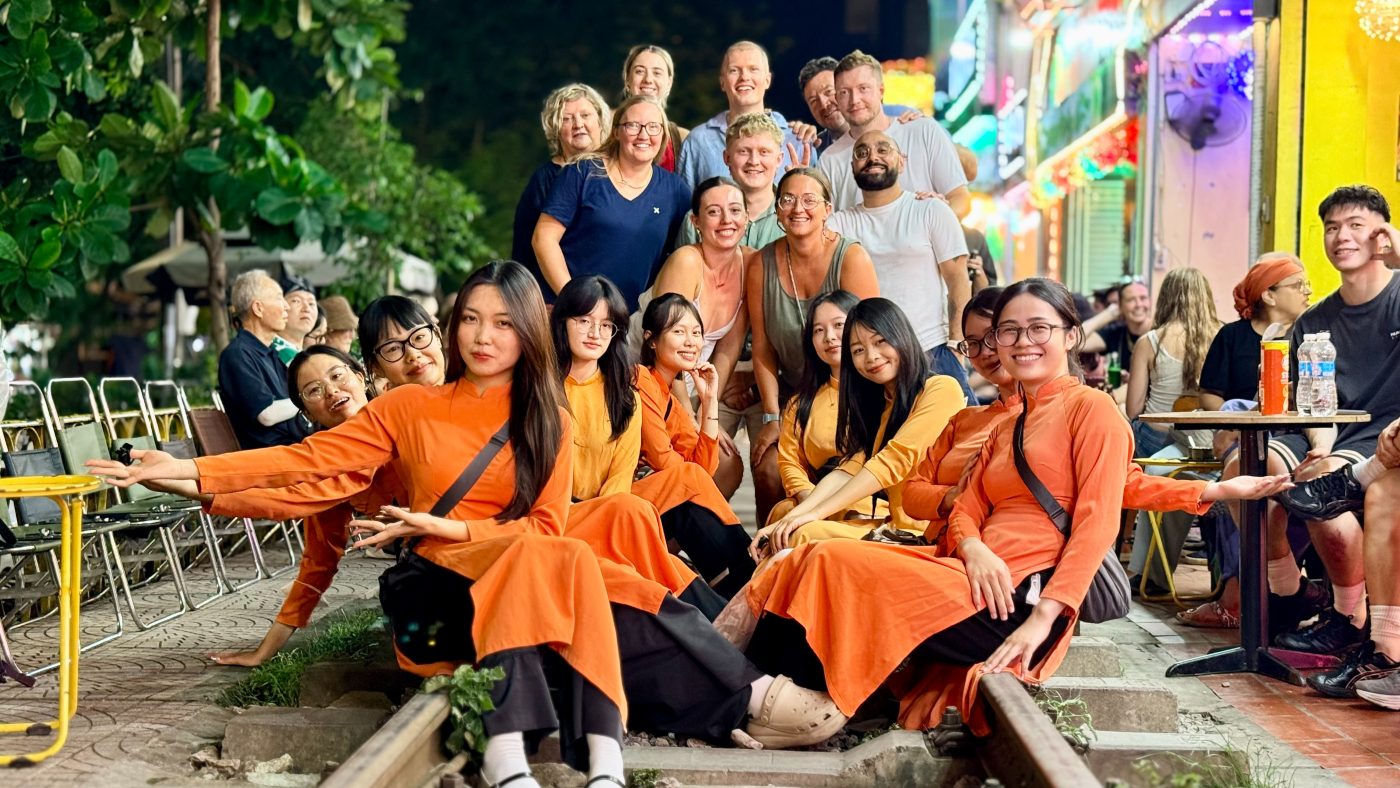
Hanoi Train Street
Hanoi Train Street is famous for its narrow railway corridor surrounded by buildings and cafés. However, access arrangements can change. Visitors should follow current local rules and only enter permitted areas. Never position yourself dangerously close to railway tracks for photographs.
The area can be interesting from a cultural and architectural perspective, but safety should come first.
Water Puppet Shows
A water puppet performance is one of the easiest cultural experiences to include in a Hanoi itinerary, particularly for families and first-time visitors. Performances combine traditional puppetry, music and stories connected with Vietnamese life and history. Official Vietnam travel itineraries frequently include an evening water puppet show after daytime sightseeing.
Hanoi for Couples
Couples can enjoy Hanoi at a slower pace. Walk around Hoan Kiem Lake, share egg coffee, explore the Old Quarter, take a private Vespa ride and finish with a Vietnamese dinner. West Lake is particularly nice around sunset.
The best romantic Hanoi itinerary does not need expensive attractions. Time, privacy and good food are often enough.
Hanoi for Families
Families should combine cultural attractions with activities that children can enjoy. Try Hoan Kiem Lake, a water puppet show, the Old Quarter, Vietnamese desserts and a short private sightseeing experience. Older children and teenagers may enjoy bicycles, Vespa experiences or a food tour much more than a full day inside museums.
Hanoi for Solo Travelers
Solo visitors can easily explore the Old Quarter, join a food experience, spend time in cafés and take a small-group tour. A guided Vespa or bicycle experience can also be an easy way to explore neighborhoods that may be difficult to navigate alone.
Where Should First-Time Visitors Stay?
Hoan Kiem and the Old Quarter are the most convenient areas for travelers who want restaurants, cafés, markets and major attractions nearby. The French Quarter is a strong choice for visitors who prefer wider streets, colonial architecture and upscale hotels. West Lake is better for longer stays and travelers who want a quieter neighborhood.
Hotel location matters. A beautiful room far from everything may be less convenient than a slightly smaller hotel in the right neighborhood.
How to Get From Noi Bai Airport to Hanoi
Noi Bai International Airport is about 27 kilometres from central Hanoi. Official tourism guidance lists taxis, ride-hailing services, airport shuttles and the 86 Express Bus among the available options. Travel time can vary substantially with traffic, so first-time visitors should leave a reasonable buffer when planning airport transfers.
For international arrivals after a long flight, a pre-arranged private airport transfer is usually the simplest option, particularly for couples, families and travelers carrying substantial luggage.
How to Get Around Hanoi
Walking is best for the Old Quarter and Hoan Kiem area. Use reputable taxis or ride-hailing services for longer journeys. A private car is convenient for families and groups. Bicycles work well for quieter areas and countryside. Vespa and motorbike experiences are useful for visitors who want a wider view of the city without driving themselves.
Should You Rent a Motorbike in Hanoi?
First-time visitors should think carefully before renting a motorbike. Hanoi traffic can be challenging, and licensing and insurance requirements matter. Visitors who are not experienced and properly licensed may find a professional passenger experience much more comfortable.
You can still experience Hanoi by motorbike or Vespa without personally navigating the streets.
What Should You Wear in Hanoi?
Comfortable walking shoes are essential. Lightweight clothes work well in warmer periods, while a light jacket may be useful during cooler weather. Bring rain protection when appropriate and dress respectfully at temples, pagodas and other religious sites.
For Vespa or motorbike experiences, practical clothing and secure shoes are better than high heels or very loose garments.
Hanoi Weather: What First-Time Visitors Should Expect
Hanoi has distinct seasonal changes, so do not assume the city is hot and tropical throughout the year. Conditions can range from cooler winter days to hot, humid periods and rainy spells. Check the forecast for your specific travel dates and pack accordingly.
The most useful strategy is flexibility: don’t make your entire Hanoi itinerary dependent on outdoor activities.
How Much Money Do You Need in Hanoi?
Hanoi can accommodate many travel styles, from budget street-food trips to premium private experiences. Your main costs will usually be hotel, meals, transportation, tours and entrance fees.
Street food and small cafés can be very affordable, while luxury hotels, private drivers, premium restaurants and private tours naturally require a larger budget.
For international visitors, a sensible approach is to use cards where convenient while keeping some Vietnamese cash available for smaller purchases.
Is Hanoi Expensive?
Compared with many major international cities, Hanoi can offer excellent value, especially for food, cafés and transportation. The final budget depends heavily on your hotel category and how much private transportation and guided activity you use.
The city can therefore work equally well for independent travelers and travelers looking for a premium private experience.
Is Hanoi Safe for First-Time Visitors?
Hanoi is generally straightforward for tourists, but visitors should use normal city precautions. Protect your phone and wallet in crowded areas, be careful around traffic and use reputable transportation.
The biggest practical challenge for newcomers is usually not crime but traffic and road awareness. Keep your attention on the street when crossing and don’t become distracted while taking photographs.
How to Avoid Tourist Scams
You do not need to be paranoid, but you should be clear about prices and services. For transportation, use reputable services or pre-arrange a private transfer. Before accepting an informal service, ask the price first.
For shopping, understand whether the price is fixed or negotiable.
For tours, check what the price includes before paying.
Internet, SIM and eSIM
Having mobile data makes Hanoi much easier to navigate. You will likely use your phone for maps, translation, transportation, hotel communication and booking confirmations.
Save your hotel address and important information offline in case your connection stops working.
What Should You Pack for Hanoi?
For most first-time visitors, bring comfortable walking shoes, lightweight clothing, one adaptable jacket, rain protection, sunscreen, a small day bag, phone charger, power bank and essential documents. Don’t overpack. Hanoi has plenty of shopping and laundry services, so there is little reason to carry an enormous suitcase.
Can You Visit Hanoi and Ha Long Bay Together?
Yes. Hanoi is an excellent starting point for Ha Long Bay. If you have seven or more days in Vietnam, spending two or three nights in Hanoi and one night on a Ha Long Bay cruise creates a strong Northern Vietnam introduction.
For a longer Vietnam itinerary, continue from Hanoi and Ha Long Bay toward Central Vietnam.
Hanoi as the Start of a Vietnam Trip
For first-time visitors with 10–14 days, Hanoi can be the first major stop in a broader route such as Hanoi → Ha Long Bay → Hoi An → Hue → Ho Chi Minh City. With three weeks, you can add mountains, beaches or the Mekong Delta.
The city works particularly well as a starting point because it introduces visitors to Vietnam’s food, history and everyday street culture before they move to other regions.
A Perfect 2-Day Hanoi Itinerary
Day 1: Hoan Kiem Lake, Ngoc Son Temple, Old Quarter, St. Joseph’s Cathedral, Temple of Literature and evening food.
Day 2: Ho Chi Minh Complex, One Pillar Pagoda, Thang Long Imperial Citadel and French Quarter, followed by a Vespa, food or cultural experience.
A Perfect 3-Day Hanoi Itinerary
Day 1: Hoan Kiem Lake, Old Quarter, Ngoc Son Temple, street food and egg coffee.
Day 2: Ho Chi Minh Complex, One Pillar Pagoda, Temple of Literature, Thang Long Imperial Citadel and water puppet show.
Day 3: Private Vespa, motorbike, Jeep or bicycle experience covering Long Bien Bridge, West Lake, quieter neighborhoods and food stops.
A Perfect 4-Day Hanoi Itinerary
Day 1: Hoan Kiem Lake and Old Quarter.
Day 2: Hanoi history and cultural attractions.
Day 3: Vespa, bicycle, Jeep or motorbike experience.
Day 4: West Lake, Tran Quoc Pagoda, markets, shopping, food or free time.
This fourth day makes the itinerary considerably more relaxed.
Final Thoughts
For first-time visitors, Hanoi can seem overwhelming for the first few hours and fascinating for the next several days. The city is busy, but its energy is part of its charm. The Old Quarter’s traditional streets, Hoan Kiem Lake, historic temples, museums, cafés, markets and street food all provide different ways to understand the capital.
The best approach is to start with the major attractions, then slow down. Walk through the Old Quarter. Eat where the locals eat. Drink Vietnamese coffee. Explore West Lake. Cross Long Bien Bridge. Experience Hanoi by Vespa or bicycle. Leave enough time for an unexpected café, a hidden pagoda or a bowl of noodles that becomes one of your favorite meals.
For most international visitors, three days in Hanoi is the perfect starting point: enough time to see the essentials, but enough flexibility to experience the city beyond the guidebook.
Explore Hanoi With Asia Vespa Tours – Led by Women
For first-time visitors who want to experience Hanoi beyond conventional sightseeing, Asia Vespa Tours offers Hanoi Vespa Tours Led by Women, Motorbike Tours, Jeep Tours, Bicycle Tours and Street Food Tours. The experience can combine the Old Quarter with Long Bien Bridge, West Lake, Hanoi’s residential neighborhoods, markets, countryside and carefully selected food stops.
A guided Vespa experience is particularly useful for visitors staying only two or three days because it allows you to cover more of Hanoi while still experiencing the city from street level. For travelers who do not ride themselves, professional riders handle the traffic while you focus on the scenery, food and stories.
For couples, families and private groups, a private or small-group women-led tour can also be adjusted around your interests, preferred pace and available time.
Contact Asia Vespa Tours
ASIA VESPA TOURS – HANOI VESPA • MOTORBIKE • JEEP • BICYCLE TOURS
Address: 91 Tho Nhuom Street, Hoan Kiem District, Hanoi, Vietnam
English Speaking: +84 98 241 6518
Vietnamese Speaking: +84 98 109 0989
Phone / WhatsApp 24/7: +84 98 241 6518
Email: info@asiavespatours.com
Website: asiavespatours.com
Hanoi Vespa Tours Led By Women
Hanoi Motorbike Tours Led By Women
Hanoi Jeep Tours Led By Women
Hanoi Bicycle Tours
Hanoi Street Food Tours Led By Women
Private & Small-Group Hanoi Experiences
See Hanoi beyond the famous landmarks—taste its food, explore its neighborhoods and experience the city from the back of a vintage Vespa.
