
Hanoi Women Travel: Complete Guide for First-Time Visitors
Hanoi is one of the best cities in Vietnam for travelers who want to experience history, food, architecture, coffee, markets, lakes, traditional culture, and modern Vietnamese life in the same destination. Founded more than 1,000 years ago, the capital combines an atmospheric Old Quarter with French colonial architecture, historic temples, contemporary cafés, restaurants, galleries, and rapidly changing neighborhoods. For first-time visitors, the key is not trying to see everything in one day. Hanoi becomes much easier to understand when you organize your visit around different parts of the city and combine major landmarks with food, street life, and guided experiences.
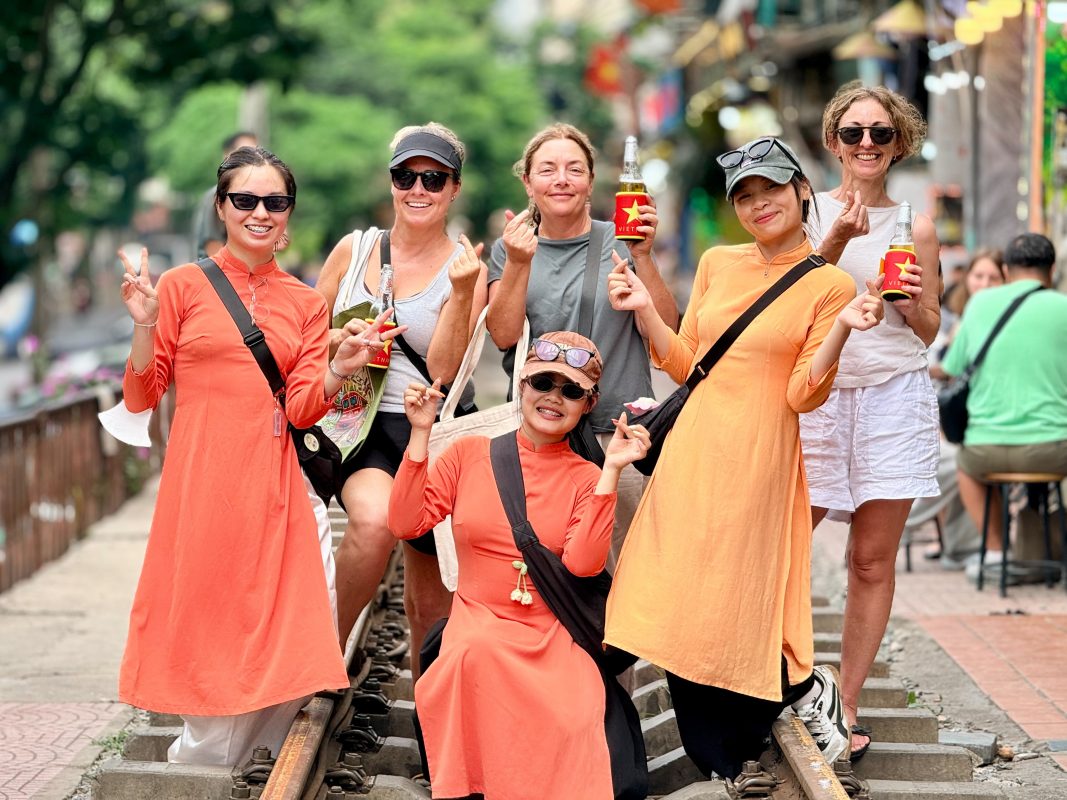
Hanoi Women Travel offers a different way to approach a first visit: private experiences led by Vietnamese women. Instead of simply transferring between attractions, travelers can explore Hanoi by Vintage Vespa, motorbike, Jeep, bicycle, walking tour, food tour, or private cultural itinerary. The advantage of a women-led private experience is that the day can be adjusted around your interests, whether you are visiting Hanoi for the first time as a solo traveler, couple, family, or private group.
Start Your First Hanoi Trip Around Hoan Kiem Lake
Hoan Kiem Lake is the natural starting point for a first visit because it sits at the center of Hanoi’s historic core. The lake is surrounded by important streets, the Old Quarter, French Quarter, Ngoc Son Temple, cafés, restaurants, shops, and cultural attractions.
Early morning and late afternoon are particularly interesting because Hanoi residents gather around the lake to exercise, walk, practice tai chi, and socialize. On weekends, sections around the lake become pedestrian-oriented, creating a different atmosphere from the normal traffic of central Hanoi.
A first-time visitor should not simply photograph the lake and leave. Walk around it, cross the red Huc Bridge to Ngoc Son Temple, watch the activity around the shoreline, and use the area as the starting point for exploring the Old Quarter.
Spend Time in the Old Quarter
The Old Quarter is the part of Hanoi most first-time visitors should experience on foot.
The historic district is associated with the famous 36 streets and traditional guild trades. Many streets still preserve connections with specific products, crafts, food, or commercial activities, although the neighborhood has naturally evolved over time. The area combines old tube houses, temples, cafés, restaurants, shops, street vendors, and modern businesses.
Do not try to walk through every street. Choose a few areas and explore slowly. Look inside small shops, notice the architecture, stop for Vietnamese coffee, try street food, and allow yourself time to observe how people use the streets.
Understand Hanoi Through Its Food
For a first-time visitor, food should not be treated as something you do only after sightseeing.
Food is one of the fastest ways to understand Hanoi.
Start with phở, try bún chả, sample bánh cuốn, taste Vietnamese desserts, and finish with traditional Vietnamese coffee or egg coffee. Hanoi’s Old Quarter is particularly well known for street kitchens serving dishes such as phở and bún chả.
A women-led private food tour can make this easier because your guide can introduce the dishes, explain how they are eaten, and take you between different neighborhoods rather than leaving you to search for restaurants on your own.
Try Phở for Breakfast
Breakfast in Hanoi is an experience in itself.
A steaming bowl of phở early in the morning allows you to experience the city when vendors are preparing food, residents are heading to work, and the streets are beginning to become busy.
Vietnam Tourism also highlights phở as one of Hanoi’s essential culinary experiences.
Eat Bún Chả in Hanoi
Bún chả is another dish that should be on every first-time visitor’s list.
Grilled pork, rice noodles, herbs, vegetables, and dipping sauce create a distinctly northern Vietnamese combination.
Rather than simply ordering the dish without context, ask your guide or restaurant staff about the ingredients and traditional way of eating it.
Discover Vietnamese Coffee Culture
Hanoi has a remarkable café culture.
You will find traditional coffee shops hidden inside narrow buildings, tiny sidewalk cafés, modern specialty coffee shops, rooftop cafés, and lakeside places where residents spend long periods talking and relaxing.
Vietnam Tourism specifically highlights Hanoi’s coffee culture as an important part of understanding the city’s rhythm.
Egg coffee is the classic first-time experience, but do not stop there. Try Vietnamese iced coffee, hot black coffee, and other regional styles.
Explore the French Quarter
After the narrow streets of the Old Quarter, the French Quarter provides a dramatic change.
Wide tree-lined avenues, colonial buildings, villas, and the Hanoi Opera House create a more spacious architectural environment.
For first-time visitors interested in photography and history, this is one of the most useful areas for understanding how different historical periods have shaped Hanoi.
Visit the Temple of Literature
The Temple of Literature should be high on the list for a first visit.
Established in 1070 and associated with Vietnam’s first university from 1076, the complex is one of Hanoi’s most important cultural and educational landmarks. Its courtyards, traditional architecture, gardens, scholar steles, and historical atmosphere make it very different from the busy Old Quarter.
This is a place where having a knowledgeable guide can significantly improve the experience because the architecture and symbols have historical meanings that are easy to overlook.
Explore Ba Dinh
Ba Dinh introduces another important chapter of Hanoi’s history.
The district contains major national landmarks and is closely associated with modern Vietnamese history.
A first-time visitor can combine the area with the One Pillar Pagoda, the Ho Chi Minh complex, and nearby historic attractions.
Because some sites have specific visitor schedules and dress requirements, check current arrangements before visiting.
See the One Pillar Pagoda
The One Pillar Pagoda is one of Hanoi’s most recognizable traditional structures.
The small Buddhist pagoda stands above a lotus pond and dates to the Ly dynasty. Its compact size means that it does not require a long visit, but it works naturally as part of a Ba Dinh cultural itinerary.
Visit the Imperial Citadel of Thang Long
First-time visitors who want more historical depth should include the Imperial Citadel of Thang Long.
The site represents a much older layer of Hanoi’s political history and forms part of the city’s heritage landscape.
Combining the Imperial Citadel with the Temple of Literature and Old Quarter provides a stronger understanding of Hanoi’s development than visiting any one location separately.
Spend Time Around West Lake
West Lake offers a slower side of Hanoi.
The lake is surrounded by cafés, restaurants, temples, residential neighborhoods, modern buildings, and scenic roads.
Truc Bach Lake and Thanh Nien Street are nearby, making it easy to combine both lakes in the same afternoon.
Vietnam Tourism identifies West Lake and Truc Bach as important parts of Hanoi’s lake landscape.
Discover Hanoi by Vintage Vespa
For a first-time visitor, a Vintage Vespa tour can be an efficient way to understand the city geographically.
Instead of spending the day walking between attractions, you can move between the Old Quarter, French Quarter, West Lake, Long Bien Bridge, residential neighborhoods, food streets, and countryside areas.
Most guests ride as passengers behind experienced drivers, allowing them to focus on sightseeing rather than traffic and navigation.
A private women-led Vespa experience is particularly useful when you want the route adapted to your interests rather than following a large-group schedule.
Explore Hanoi by Motorbike
Motorbike travel allows you to see the city from street level.
A female rider can take you through narrow alleys, residential streets, markets, food areas, and neighborhoods that are difficult to cover efficiently on foot.
For first-time visitors, this is particularly useful after spending time in the Old Quarter because you can quickly see how much larger Hanoi is beyond the historic center.
Try a Private Jeep Experience
Travelers who prefer four-wheel transportation can choose a private Jeep.
The open-air format provides a different perspective from a conventional car while offering more seating comfort than a motorbike.
It is particularly suitable for families, couples, mature travelers, and visitors who want a sightseeing experience without riding a scooter.
Discover Hanoi by Bicycle
Bicycle travel is best for visitors who want a slower introduction to the city.
It can be particularly enjoyable in quieter neighborhoods and countryside areas where traffic is lighter and there are more opportunities to stop for photographs.
A private bicycle experience can connect urban Hanoi with Red River agricultural landscapes.
Cross Long Bien Bridge
Long Bien Bridge is one of the best places to understand the transition from central Hanoi to the Red River landscape.
The bridge provides an excellent photographic viewpoint and a natural gateway toward agricultural areas.
For first-time visitors, crossing the bridge by Vespa, motorbike, or Jeep can be much more memorable than simply viewing it from a distance.
Discover the Red River Countryside
One of the biggest mistakes first-time visitors make is assuming Hanoi ends with the Old Quarter and central districts.
The Red River countryside is surprisingly close to the city center.
A private countryside journey can reveal vegetable farms, banana plantations, gardens, village roads, traditional houses, and agricultural communities.
This contrast between dense urban Hanoi and the surrounding rural landscape is one of the best ways to understand the capital.
Visit Co Loa
Co Loa is a worthwhile option for travelers who want to explore Vietnam’s ancient history.
The destination works particularly well as part of a countryside itinerary because the journey itself becomes part of the experience.
Instead of spending an entire day inside central Hanoi, you can combine historical sites with rural scenery and traditional Vietnamese food.
Visit Bat Trang Ceramic Village
Bat Trang is another good choice for first-time visitors who want to experience traditional craftsmanship.
A private guide can introduce the village’s ceramic traditions, workshops, products, and everyday life.
The experience becomes more meaningful when you learn how Vietnamese ceramics are produced rather than simply purchasing souvenirs.
Discover Hanoi’s Markets
Markets are excellent places to understand everyday Vietnamese life.
You can see fresh vegetables, herbs, fruit, meat, seafood, flowers, household products, and prepared food.
For travelers unfamiliar with Vietnamese ingredients, a female guide can explain what you are seeing and how different ingredients are used in Vietnamese cooking.
Morning is generally the best time to experience the energy of traditional markets.
Explore Hanoi’s Hidden Alleys
The most memorable first-time experiences are not always famous attractions.
A small alley may contain a family restaurant, café, temple, workshop, traditional home, or neighborhood business.
The Old Quarter is particularly rewarding for this kind of exploration. Vietnam Tourism notes that hidden alleyways, pagodas, shops, cafés, and traditional houses are part of what makes the district worth exploring slowly.
Experience Hanoi at Night
Do not finish your sightseeing when the sun goes down.
Hanoi’s evening atmosphere is one of the city’s strongest attractions.
The Old Quarter becomes busier, restaurants and street-food stalls fill up, cafés remain active, and pedestrian areas create opportunities for people-watching.
Weekend evenings around Hoan Kiem Lake and the Old Quarter can feel particularly lively.
Take a Night Food Tour
A night food tour is one of the easiest ways for a first-time visitor to experience Hanoi after dark.
Rather than choosing one restaurant, you can sample several dishes and move through different streets.
A women-led motorbike food experience combines food with sightseeing, allowing you to see more of Hanoi while discovering its evening cuisine.
Consider a Water Puppet Show
Water puppetry is a traditional Vietnamese performing art associated particularly strongly with northern Vietnam.
For first-time visitors, an evening performance can provide a cultural experience that is completely different from street food and sightseeing.
It works well after a daytime city itinerary because the performance does not require significant additional travel.
Vietnam Tourism also includes water puppetry among recommended Hanoi cultural experiences.
Should You Visit Train Street?
Train Street is one of Hanoi’s most photographed areas, but first-time visitors should understand that access and safety conditions can change.
Do not treat access as guaranteed. Follow current local regulations and your guide’s instructions.
If access is restricted, the rest of Hanoi offers many alternative neighborhoods, cafés, markets, and cultural sites that provide equally interesting photography opportunities.
How Many Days Do You Need in Hanoi?
Two full days can provide a useful introduction, but three days is more comfortable for first-time visitors.
With two days, focus on the Old Quarter, Hoan Kiem Lake, French Quarter, Temple of Literature, Ba Dinh, West Lake, food, coffee, and an evening experience.
With three days, add a countryside excursion, craft village, Co Loa, or a more extensive private cultural experience.
Hanoi in One Day
If you have only one day, do not try to visit every attraction.
Start around Hoan Kiem Lake and the Old Quarter. Have breakfast with phở, explore the historic streets, and continue toward the French Quarter and Temple of Literature.
After lunch, visit Ba Dinh and West Lake before taking a private Vespa or motorbike route through neighborhoods you have not yet seen.
Finish with Vietnamese food and egg coffee.
The goal should be to experience Hanoi rather than collect photographs of every landmark.
Hanoi in Two Days
Day one can focus on central Hanoi: Hoan Kiem Lake, Old Quarter, French Quarter, Temple of Literature, Ba Dinh, Vietnamese food, coffee, and evening sightseeing.
Day two can move toward Long Bien Bridge and the Red River countryside. Add Co Loa or Bat Trang if you want more history or traditional craftsmanship.
This gives you both urban and rural perspectives.
Hanoi in Three Days
Three days allows a much more balanced trip.
Spend the first day understanding central Hanoi.
Use the second day for a private city-and-countryside experience.
Reserve the third day for food, shopping, cafés, museums, hidden neighborhoods, West Lake, or experiences that match your personal interests.
This is much less rushed than trying to complete everything during a single full-day tour.
Where Should First-Time Visitors Stay?
The Old Quarter is convenient for travelers who want to be close to street food, cafés, markets, Hoan Kiem Lake, nightlife, and many first-time attractions.
The French Quarter is a good choice for travelers who prefer a more spacious architectural environment and proximity to the Opera House and central luxury hotels.
West Lake is attractive for travelers who prefer lakeside scenery, cafés, restaurants, and a quieter residential atmosphere.
Choose accommodation based on the atmosphere you want rather than simply choosing the most famous hotel.
How Should You Get Around Hanoi?
Walking works very well for the Old Quarter and Hoan Kiem area.
Taxis and ride-hailing services are practical for moving between districts. Hanoi also has buses and other transportation options. Vietnam Tourism notes that visitors can use taxis, buses, motorbikes, ride-hailing services, and cyclos for sightseeing.
For sightseeing, a private Vespa, motorbike, Jeep, or bicycle tour can be more efficient because the transportation and guiding are combined.
Should First-Time Visitors Book a Private Tour?
A private tour is particularly useful if you have limited time.
Instead of spending time deciding where to go next, your female guide can organize the route around your interests.
Private travel is also useful for travelers with dietary requirements, photography interests, mobility considerations, children, or specific cultural interests.
The greatest advantage is flexibility.
Private or Group Tour?
Choose private travel when you want control over the itinerary and pace.
Choose a small group when you enjoy meeting other travelers and prefer a social atmosphere.
For a first visit, both can work well. However, a private experience usually provides more opportunity to ask questions and explore places that match your interests.
Why Choose a Women-Led Hanoi Experience?
A women-led tour is not simply about traveling with a female driver.
The real advantage is the personal connection and cultural perspective provided by Vietnamese women who know Hanoi professionally and personally.
Your guide can explain food traditions, family life, customs, neighborhoods, history, shopping, coffee culture, and everyday experiences.
Asia Vespa Tours positions its women-led experiences around professional female guides and riders while creating career opportunities for women in Vietnam’s tourism industry.
What Should You Wear in Hanoi?
Comfortable clothing is essential because first-time visitors usually combine walking with sightseeing.
When visiting temples and cultural sites, modest clothing is the safest choice.
Comfortable shoes are important for the Old Quarter, Hoan Kiem Lake, markets, and historic attractions.
If you choose a Vespa or motorbike experience, practical clothing is preferable.
What Should You Pack?
A first-time visitor should carry comfortable walking shoes, sunscreen, sunglasses, a reusable water bottle, phone, camera, light rain protection, and a small amount of Vietnamese cash.
Do not carry your entire luggage around the city during sightseeing.
A small crossbody bag or backpack is much more practical.
What About Hanoi Weather?
Hanoi has distinct seasonal differences, so your experience can vary considerably depending on when you visit.
Vietnam Tourism identifies April to June and September to October as particularly appealing periods, with May and the early autumn months offering favorable conditions for many visitors.
Summer can be hot and humid with periods of heavy rain, while winter can feel cool and damp.
Plan outdoor activities around the season rather than assuming Hanoi has the same weather throughout the year.
How Should You Plan Your First Morning?
Do not sleep through your first morning if you want to experience Hanoi properly.
Start around Hoan Kiem Lake, walk among residents exercising, explore the Old Quarter while it is still relatively calm, and have a Vietnamese breakfast.
A sunrise Vespa or walking experience is another excellent option.
Early morning gives you a different Hanoi from the one you will see in the afternoon.
How Should You Plan Your First Evening?
Keep your first evening relatively relaxed.
Explore the Old Quarter, walk around Hoan Kiem Lake, eat Vietnamese street food, visit a café, and consider a night food tour.
Do not schedule too many distant attractions because Hanoi’s evening streets are themselves part of the experience.
What Should First-Time Visitors Avoid?
Do not try to see every attraction in one day.
Do not judge Hanoi only by its busiest streets.
Do not spend your entire trip inside tourist restaurants.
Do not assume the most photographed location is automatically the most interesting.
Do not ignore the countryside.
And do not plan every hour so tightly that there is no time to stop for coffee, photographs, food, or an unexpected discovery.
A Practical First-Time Hanoi Itinerary
A strong three-day introduction can begin with central Hanoi.
Day 1: Hoan Kiem Lake, Ngoc Son Temple, Old Quarter, Vietnamese breakfast, French Quarter, Temple of Literature, Vietnamese lunch, coffee, and an evening food experience.
Day 2: Ba Dinh, One Pillar Pagoda, Imperial Citadel area, West Lake, Truc Bach, Long Bien Bridge, Red River countryside, and a private Vietnamese cultural experience.
Day 3: Choose between Bat Trang, Co Loa, a private Vespa city tour, a food-focused experience, traditional markets, shopping, museums, cafés, or a relaxed day around West Lake.
This structure gives first-time visitors a mixture of history, food, architecture, everyday life, countryside, and modern Hanoi.
The Best Way to See Hanoi for the First Time
There is no single transportation method that is best for every visitor.
Walking is ideal for discovering the Old Quarter.
A Vintage Vespa is excellent for combining several neighborhoods.
A motorbike is ideal for reaching narrow streets and food areas.
A Jeep provides open-air sightseeing with more comfort.
A bicycle works well for quieter neighborhoods and countryside.
A private guide brings all of these options together by explaining what you are seeing and adapting the itinerary to your interests.
Contact Asia Vespa Tours – Vietnam Women Travel
Website: asiavespatours.com
Phone / WhatsApp: +84 982 416 518
Email: info@asiavespatours.com
Office: 44 Ham Tu Quan Street, Hoan Kiem District, Hanoi, Vietnam.
Final Thoughts
Your first visit to Hanoi should not feel like a race between attractions. The city is most rewarding when you combine its major historical landmarks with the ordinary experiences happening around them.
Walk around Hoan Kiem Lake early in the morning. Explore the Old Quarter slowly. Eat phở and bún chả. Drink egg coffee. Visit the Temple of Literature. Explore Ba Dinh and the Imperial Citadel. See the French Quarter and Hanoi Opera House. Spend time around West Lake. Cross Long Bien Bridge. Travel into the Red River countryside. Visit a traditional village or craft community. Then return to the city for dinner and Hanoi’s evening atmosphere.
For travelers who want more than a standard sightseeing itinerary, a private women-led experience provides another way to understand the capital. With a Vietnamese female guide, you can combine food, history, architecture, neighborhoods, countryside, photography, and everyday life while keeping control of your own schedule.
That is ultimately the best introduction to Hanoi: not simply seeing where the city is, but understanding how the city lives.
